.png)
.png)
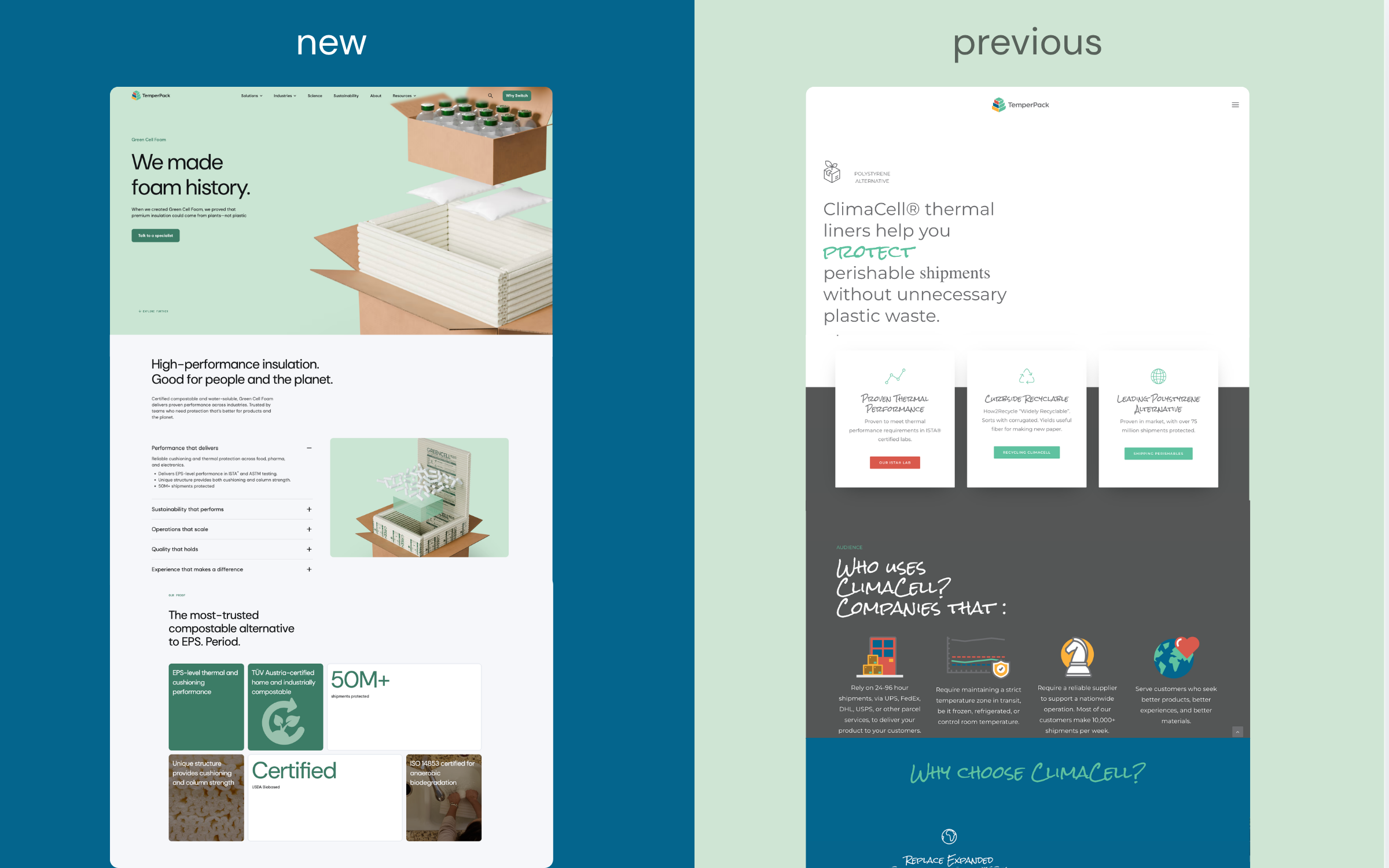
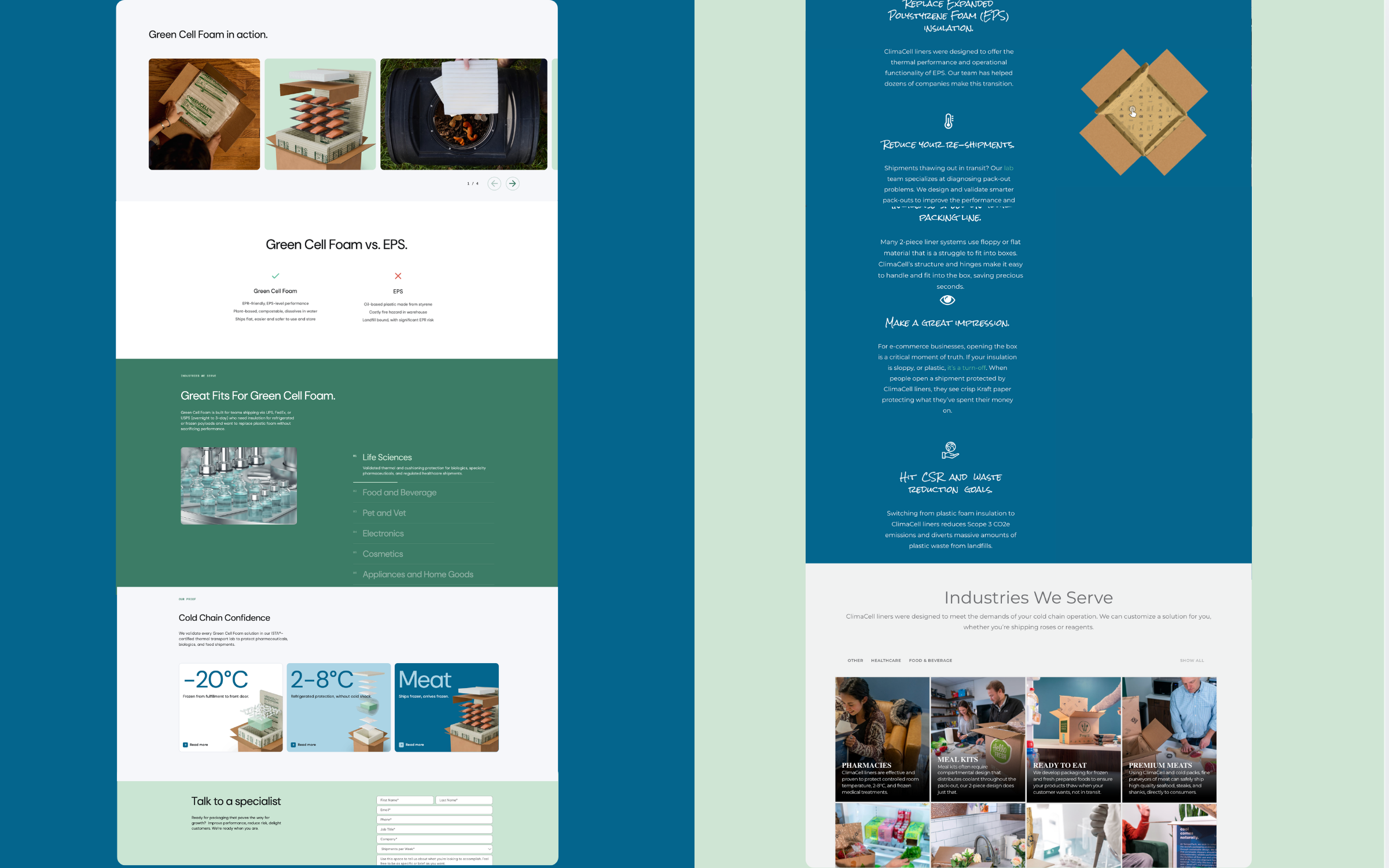
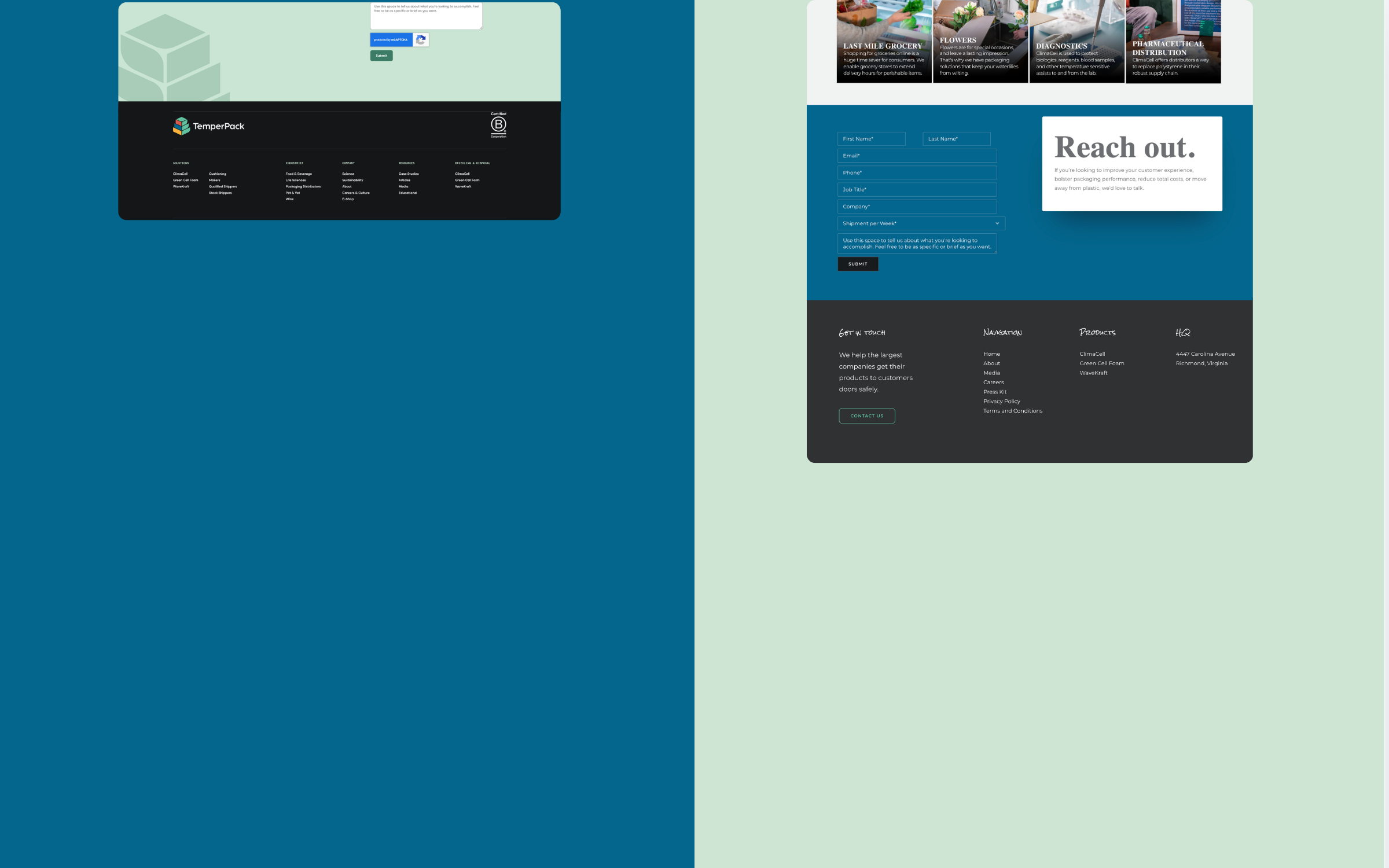
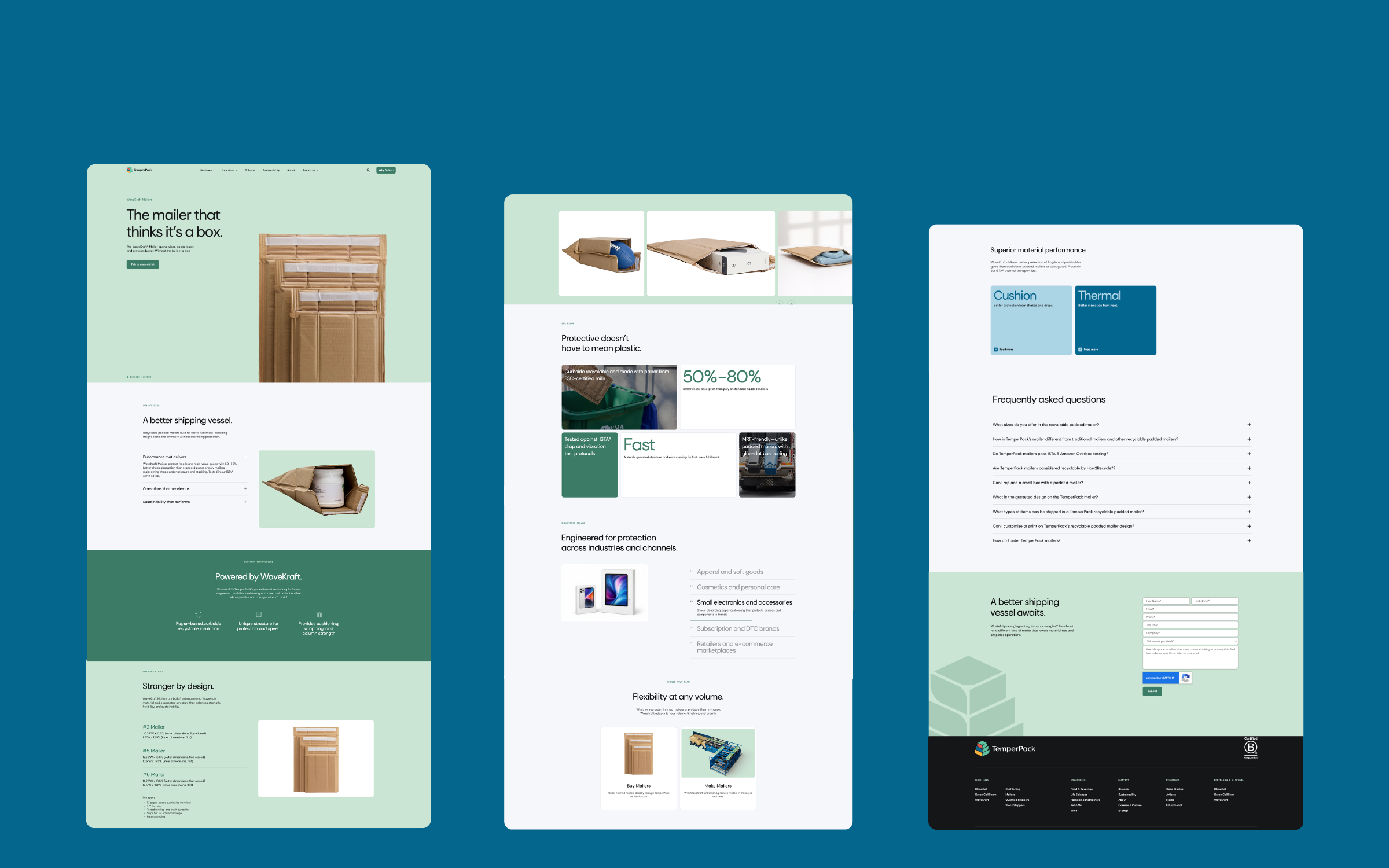
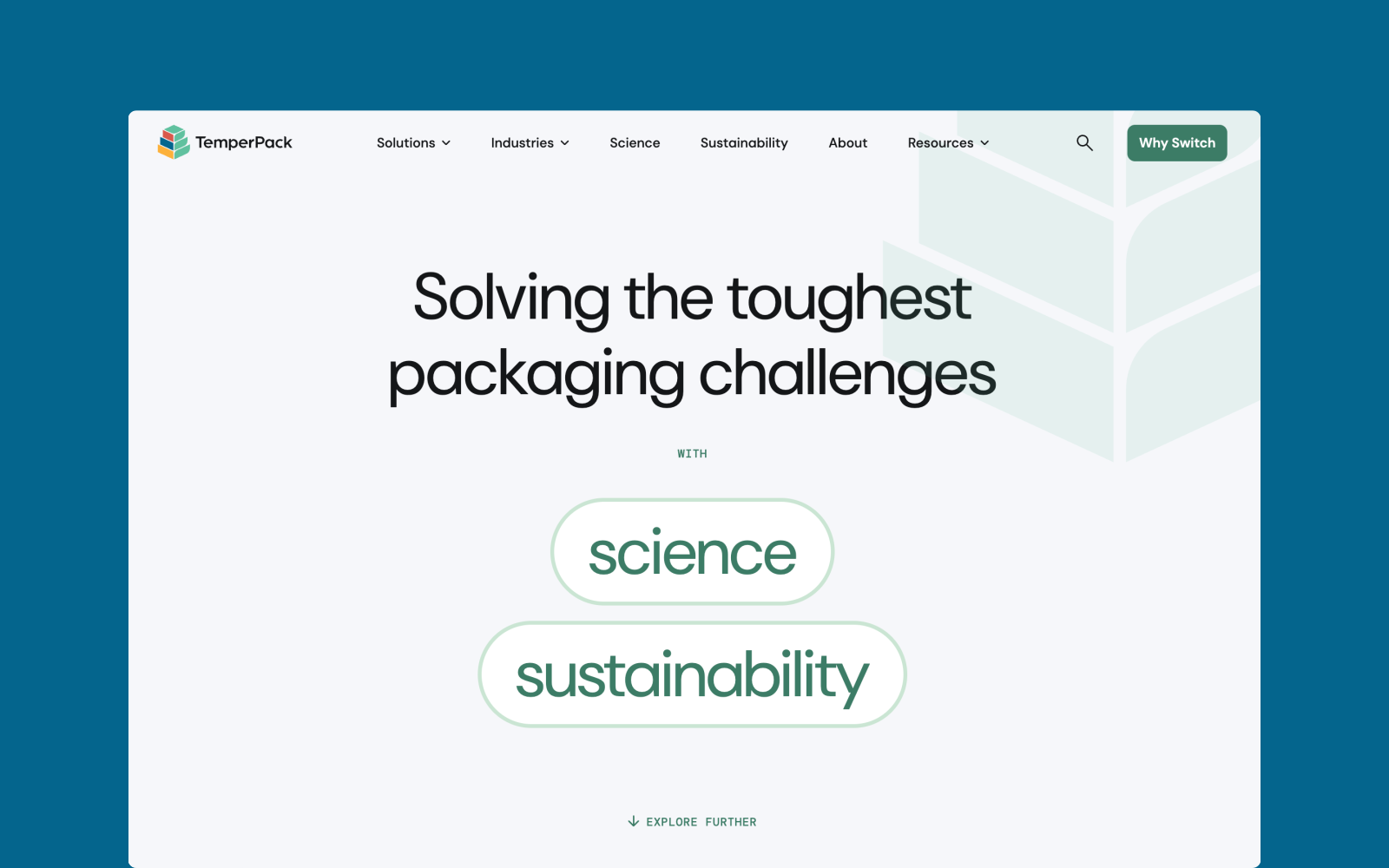
TemperPack had the products, the proof, and the position.
What it didn’t have was a clear way to explain itself at scale.
The site leaned on mission. Product pages read like feature lists.
No system. No consistent structure. No through line a buyer could follow.
The rebuild changed that.
Same company. Clearer argument.
Every page pulling in the same direction.
What I Built
The products were differentiated. The pages weren't.
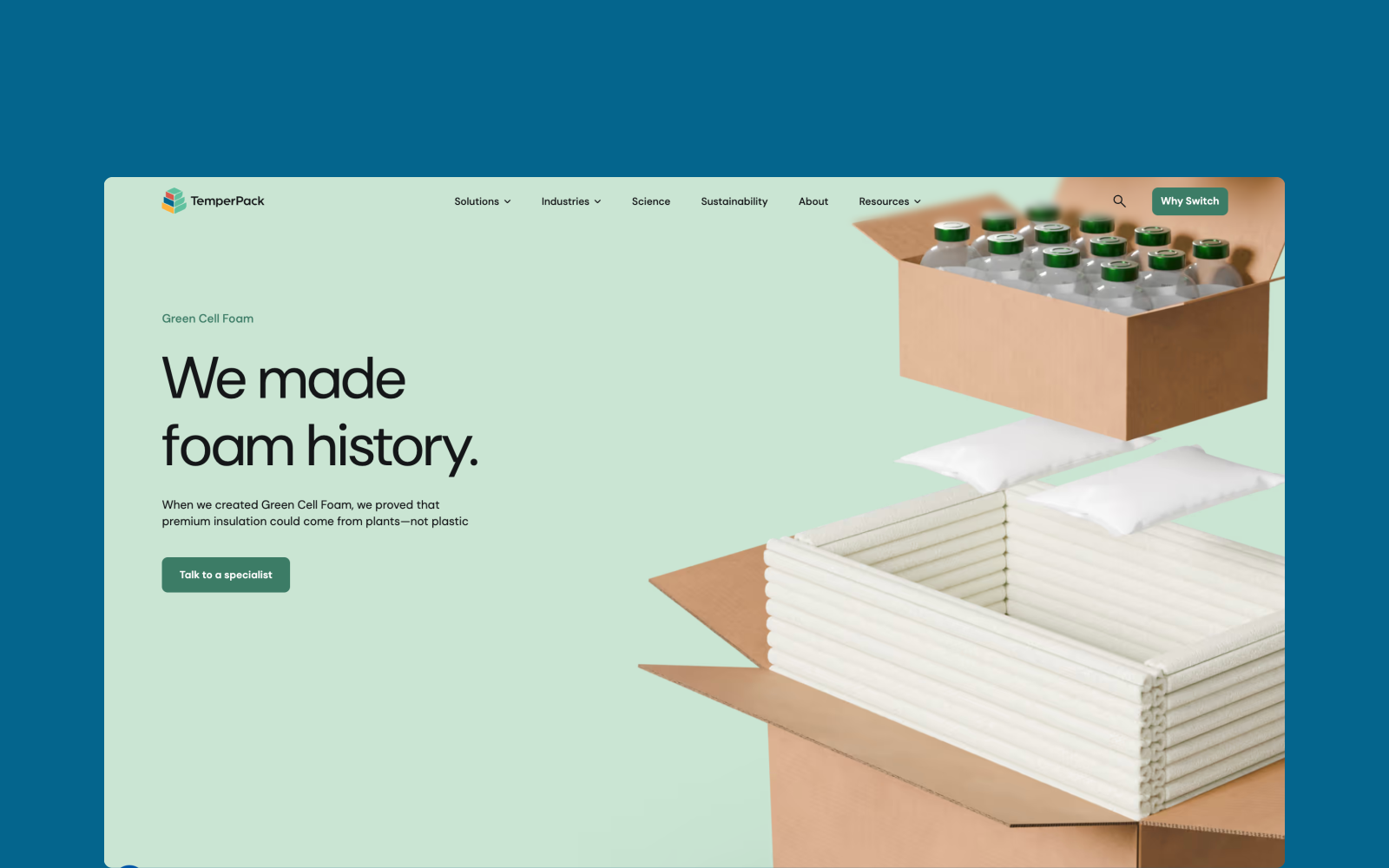
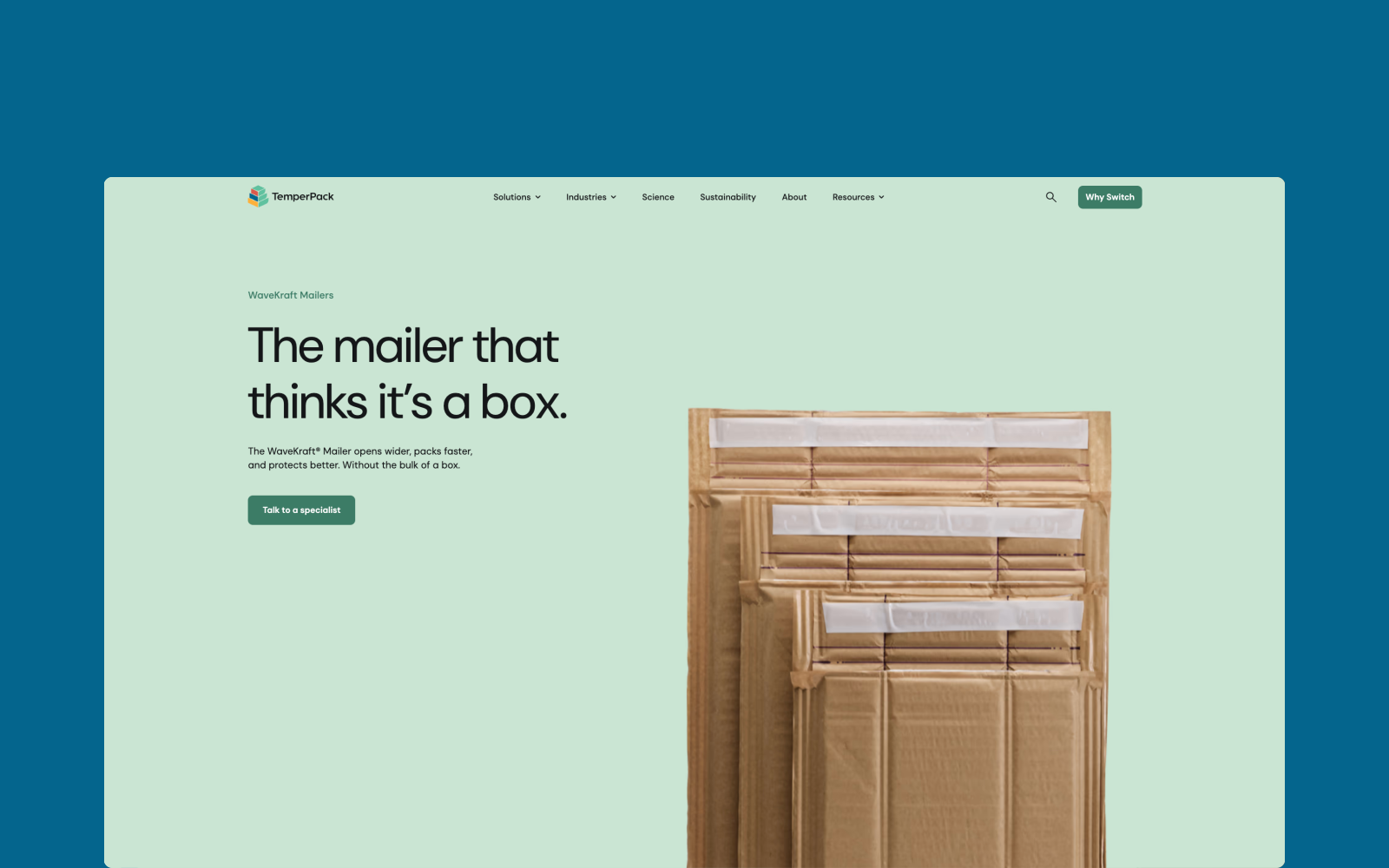
TemperPack made three distinct things — a fiber-based insulation, a cooling platform, a procurement portal — and the site flattened them. Performance data was buried. Certifications were scattered. There was no structure that let a buyer understand what they were looking at or why it mattered.
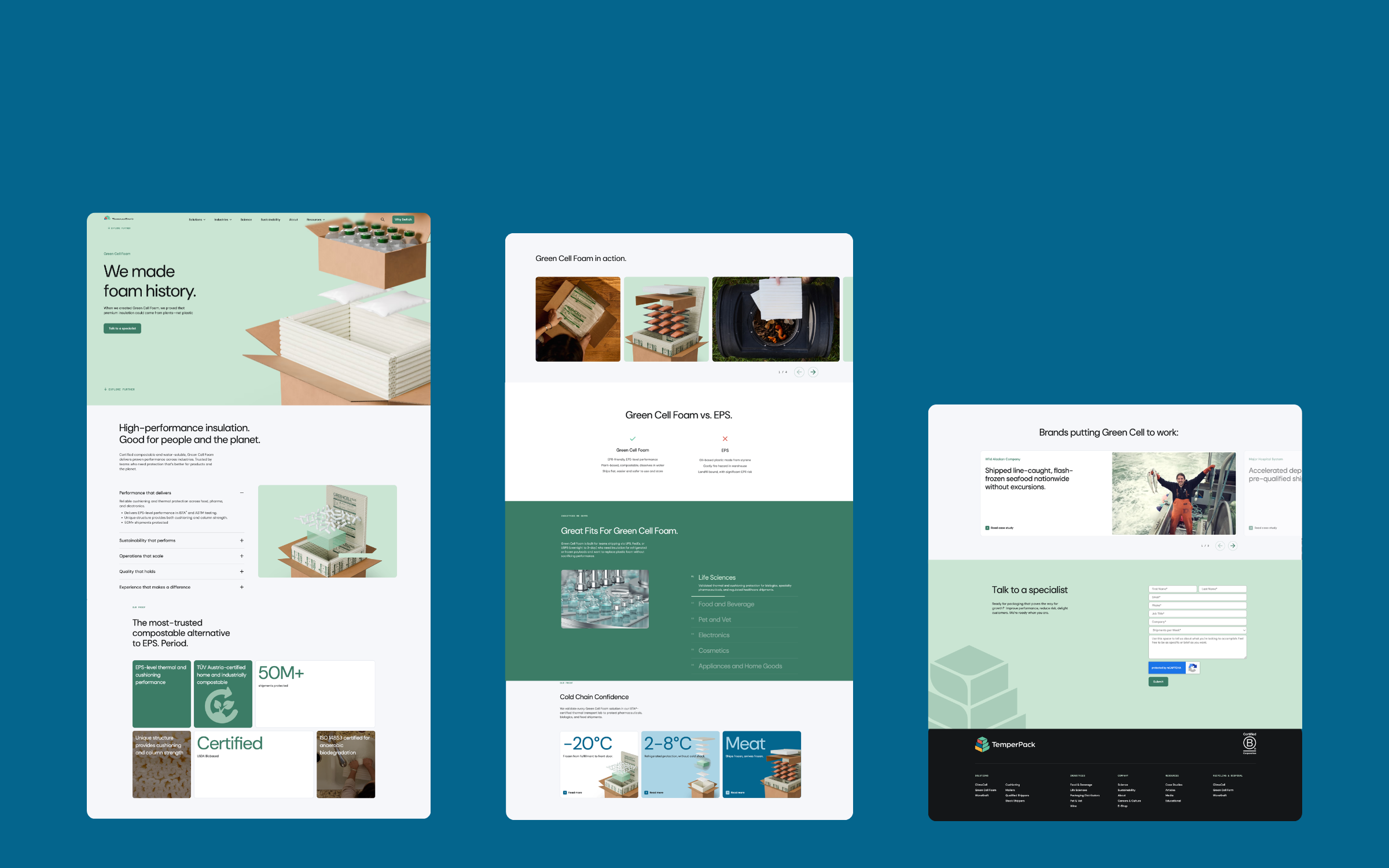
I rebuilt the site so each product could make its own argument. That meant defining a repeatable architecture: what role the product plays in the market, what that means in plain language, how it performs, how it fits into real operations, and why it's credible. Same logic across every page. Different competitive stance for each product.
The proof was already there. The work was sequencing it so the reader didn't have to assemble it themselves.
What It Became
A site that works without a sales team explaining it. The sustainability story is still there — but now it shows up as measurable performance, not a mission statement. The portfolio reads as a portfolio. Each page stands on its own and reinforces the rest.
TemperPack didn't change what it stood for. It got a system that could finally make the case.